miércoles, 18 de julio de 2012
[LIBRO] Historia General de Las Drogas (Antonio Escohotado)
http://es.scribd.com/doc/7345936/Historia-General-de-Las-Drogas-Antonio-Escohotado-eBook

viernes, 6 de julio de 2012
[2C-B] PIHKAL #20 2c-b
#20 2C-B
4-BROMO-2,5-DIMETHOXYPHENETHYLAMINE
|
|
[3D .jpg image] [3D .mol structure] |

In a round-bottomed 2 L flask equipped with a magnetic stirrer and placed under an inert atmosphere, there was added 750 mL anhydrous THF, containing 30 g LAH. There was then added, in THF solution, 60 g 2,5-dimethoxy-beta-nitrostyrene. The final solution was a dirty yellow-brown color, and it was kept at reflux temperature for 24 h. After cooling, the excess hydride was destroyed by the dropwise addition of IPA. Then 30 mL 15% NaOH was added to convert the inorganic solids to a filterable mass. The reaction mixture was filtered and the filter cake washed first with THF and then with MeOH. The combined mother liquors and washings were freed of solvent under vacuum and the residue suspended in 1.5 L H2O. This was acidified with HCl, washed with with 3x100 mL CH2Cl2, made strongly basic with 25% NaOH, and reextracted with 4x100 mL CH2Cl2. The pooled extracts were stripped of solvent under vacuum, yielding 26 g of oily residue, which was distilled at 120-130 °C at 0.5 mm/Hg to give 21 g of a white oil, 2,5-dimethoxy-phenethylamine (2C-H) which picks up carbon dioxide from the air very quickly.
To a well-stirred solution of 24.8 g 2,5-dimethoxyphenethylamine in 40 mL glacial acetic acid, there was added 22 g elemental bromine dissolved in 40 mL acetic acid. After a couple of min, there was the formation of solids and the simultaneous evolution of considerable heat. The reaction mixture was allowed to return to room temperature, filtered, and the solids washed sparingly with cold acetic acid. This was the hydrobromide salt. There are many complicated salt forms, both polymorphs and hydrates, that can make the isolation and characterization of 2C-B treacherous. The happiest route is to form the insoluble hydrochloride salt by way of the free base. The entire mass of acetic acid-wet salt was dissolved in warm H2O, made basic to at least pH 11 with 25% NaOH, and extracted with 3x100 mL CH2Cl2. Removal of the solvent gave 33.7 g of residue which was distilled at 115-130 °C at 0.4 mm/Hg. The white oil, 27.6 g, was dissolved in 50 mL H2O containing 7.0 g acetic acid. This clear solution was vigorous stirred, and treated with 20 mL concentrated HCl. There was an immediate formation of the anhydrous salt of 2,5-dimethoxy-4-bromophenethylamine hydrochloride (2C-B). This mass of crystals was removed by filtration (it can be loosened considerably by the addition of another 60 mL H2O), washed with a little H2O, and then with several 50 mL portions of Et2O. When completely air-dry, there was obtained 31.05 g of fine white needles, with a mp of 237-239 °C with decomposition. When there is too much H2O present at the time of adding the final concentrated HCl, a hydrated form of 2C-B is obtained. The hydrobromide salt melts at 214.5-215 °C. The acetate salt was reported to have a mp of 208-209 °C.
DOSAGE: 12 - 24 mg.
DURATION: 4 - 8 h.
QUALITATIVE COMMENTS: (with 16 mg) A day at the Stanford museum. Things were visually rich, yet I felt that I was reasonably inconspicuous. The Rodin sculptures were very personal and not terribly subtle. I saw Escher things in the ceiling design, when I decided to sit in a foyer somewhere and simply pretend to rest. Walking back, the displays seen in the bark of the eucalyptus trees, and the torment and fear (of others? of themselves?) in the faces of those who were walking towards us, were as dramatic as anything I had seen in the art galleries. Our appetites were enormous, and we went to a smorgasbord that evening. A rich experience in every possible way.
(with 20 mg) The drug effect first became known to me as a shift of colors toward golden and rose tones. Pigments in the room became intensified. Shapes became rounder, more organic. A sensation of lightness and rivulets of warmth began seeping through my body. Bright lights began pulsing and flashing behind my closed lids. I began to perceive waves of energy flowing through all of us in unison. I saw all of us as a gridwork of electrical energy beings, nodes on a bright, pulsating network of light. Then the interior landscape shifted into broader scenes. Daliesque vistas were patterned with eyes of Horus, brocades of geometric design began shifting and changing through radiant patterns of light. It was an artist's paradise--representing virtually the full pantheon of the history of art.
(with 20 mg) The room was cool, and for the first hour I felt cold and chilled. That was the only mildly unpleasant part. We had been hanging crystals earlier that day, and the visions I had were dominated by prismatic light patterns. It was almost as if I became the light. I saw kaleidoscopic forms--similar to, but less intense than, when on acid--and organic forms like Georgia O'Keefe flowers, blossoming and undulating. My body was flooded with orgasms-- practically from just breathing. The lovemaking was phenomenal, passionate, ecstatic, lyric, animal, loving, tender, sublime. The music was voluptuous, almost three-dimensional. Sometimes the sound seemed distorted to me, underwater like. This was especially so for the less good recordings--but I could choose to concentrate on the beauty of the music or the inadequacy of the sound's quality, and mostly chose to concentrate on the beauty.
(with 24 mg) I am totally into my body. I am aware of every muscle and nerve in my body. The night is extraordinary--moon full. Unbelievably erotic, quiet and exquisite, almost unbearable. I cannot begin to unravel the imagery that imposes itself during the finding of an orgasm. Trying to understand physical/spiritual merging in nature --.
EXTENSIONS AND COMMENTARY: Four quotations were chosen arbitrarily from literally hundreds that have worked their ways into the files. The vast majority are positive, ranging from the colorful to the ecstatic. But not all are. There are people who choose not to go into the corporeal but, rather, prefer the out-of-body experience. They express discomfort with 2C-B, and seem to lean more to the Ketamine form of altered state, one which dissociates body from mind.
There have been reports of several overdoses that prove the intrinsic safety of this compound. Prove is used here in the classic British sense; i.e., to challenge. "The proof of the pudding is in the eating," is not a verification of quality, but an inquiry into the quality itself. (The French simplify all this by using two separate verbs for prove.) One overdose was intentional, the other accidental.
(with 64 mg) I found only mild visual and emotional effects at the 20 milligram dose, so I took the remaining 44 milligrams. I was propelled into something not of my choosing. Everything that was alive was completely fearsome. I could look at a picture of a bush, and it was just that, a picture, and it posed no threat to me. Then my gaze moved to the right, and caught a bush growing outside the window, and I was petrified. A life-form I could not understand, and thus could not control. And I felt that my own life-form was not a bit more controllable. This was from the comments of a physician who assured me that he saw no neurological concerns during this dramatic and frightening experience.
(with 100 mg) I had weighed correctly. I had simply picked up the wrong vial. And my death was to be a consequence of a totally stupid mistake. I wanted to walk outside, but there was a swimming pool there and I didn't dare fall into it. A person may believe that he has prepared himself for his own death, but when the moment comes, he is completely alone, and totally unprepared. Why now? Why me? Two hours later, I knew that I would live after all, and the experience became really marvelous. But the moment of facing death is a unique experience. In my case, I will some day meet it again, and I fear that I will be no more comfortable with it then than I was just now. This was from the comments of a psychologist who will, without doubt, use psychedelics again in the future, as a probe into the unknown.
Many of the reports that have come in over the years have mentioned the combination of MDMA and 2C-B. The most successful reports have followed a program in which the two drugs are not used at the same time, nor even too closely spaced. It appears that the optimum time for the 2C-B is at, or just before, the final baseline recovery of the MDMA. It is as if the mental and emotional discoveries can be mobilized, and something done about them. This combination has several enthusiastic advocates in the psychotherapy world, and should be the basis of careful research when these materials become legal, and accepted by the medical community.
A generalized spectrum of 2C-B action can be gleaned from the many reports that have been written describing its effects. (1) There is a steep dose response curve. Over the 12 to 24 milligram range, every 2 milligrams can make a profound increase or change of response. Initially, one should go lightly, and increase the dosage in subsequent trials by small increments. A commonly used term for a level that produces a just perceptible effect is "museum level." This is a slightly-over-threshold level which allows public activities (such as viewing paintings in a museum or scenery watching as a passenger in a car) to be entered into without attracting attention. There can be considerable discomfort associated with being in the public eye, with higher doses. (2) The 2C-B experience is one of the shortest of any major psychedelic drug. Wherever you might be, hang on. In an hour or so you will be approaching familiar territory again. (3) If there is anything ever found to be an effective aphrodisiac, it will probably be patterned after 2C-B in structure.
There are two "Tweetios" known that are related to 2C-B. (See recipe #23 for the origin of this phrase.) The 2-EtO- homologue of 2C-B is 4-bromo-2-ethoxy-5-methoxyphenethylamine, or 2CB-2ETO. The unbrominated benzaldehyde (2-ethoxy-5-methoxybenzaldehyde) had a melting point of 47.5-48.5 °C, the unbrominated nitrostyrene intermediate a melting point of 76-77 °C, and the final hydrochloride a melting point of 185-186 °C. The hydrobromide salt had a melting point of 168.5-169.5 °C. It seems that one gets about as much effect as can be had, with a dosage of about 15 milligrams, and increases above this, to 30 and to 50 milligrams merely prolong the activity (from about 3 hours to perhaps 6 hours). At no dose was there an intensity that in any way resembled that of 2C-B.
The 2,5-DiEtO- homologue of 2C-B is 4-bromo-2,5-diethoxyphenethylamine, or 2CB-2,5-DIETO. The unbrominated impure benzaldehyde (2,5-diethoxybenzaldehyde) had a melting point of about 57 °C, the unbrominated impure nitrostyrene intermediate a melting point of about 60 °C, and the final hydrochloride a melting point of 230-231 °C. The hydrobromide salt had a melting point of 192-193 °C. At levels of 55 milligrams, there was only a restless sleep, and strange dreams. The active level is not yet known.
I have been told of some studies that have involved a positional rearrangement analogue of 2C-B. This is 2-bromo-4,5-dimethoxyphenethylamine (or 6-BR-DMPEA). This would be the product of the elemental bromination of DMPEA, and it has been assayed as the hydrobromide salt. Apparently, the intravenous injection of 60 milligrams gave a rapid rush, with intense visual effects reported, largely yellow and black. Orally, there may be some activity at the 400 to 500 milligram area, but the reports described mainly sleep disturbance. This would suggest a stimulant component. The N-methyl homologue of this rearranged compound was even less active.
Fuente: http://www.erowid.org
[DMT] TIHKAL #6 dmt
#6. DMT
TRYPTAMINE, N,N-DIMETHYL; INDOLE, 3-[2-(DIMETHYLAMINO)ETHYL]; N,N-DIMETHYLTRYPTAMINE; 3-[2-(DIMETHYLAMINO)ETHYL]INDOLE; DESOXYBUFOTENINE; NIGERINE

|
|
[3D .jpg image] [3D .mol structure] |
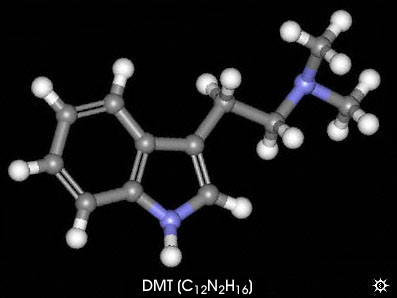
The demethylation of the iodide salt: Under an inert atmosphere, a solution of 0.40 g N,N,N-trimethyltryptammonium iodide in 5 mL THF was treated with 1.5 mL of 1M LiEt3BH in THF and held at reflux temperature for 9 h. After cooling, the mixture was acidified with dilute HCl and the THF removed under vacuum. The residue was suspended in dilute NaOH and extracted with Et2O. The extracts were pooled, and the solvent removed under vacuum to provide a residue of 0.12 g N,N-dimethyltryptamine (DMT) as a crystalline solid, with a mp of 57-59 °C. IR (in cm-1): 732, 740, 811, 859, 1011, 1037, 1110, 1171. The MS is discussed below.
The demethylation of the chloride salt: A hot aqueous solution of N,N,N-trimethyltryptammonium iodide was treated with an excess of freshly precipitated AgCl, and all was boiled gently for 15 min. The mixed silver halides were removed by filtration, and the filtrate stripped of H2O as rapidly as possible. To the residue there was added a small amount of MeOH follow by acetone until the crystallization of N,N,N-trimethyltryptammonium chloride was complete. It had a mp of 193 °C (80%), and it is considerably more water soluble than the starting iodide. This salt was pyrolysed under hard vacuum and the residue distilled. This distillate was dissolved in a small amount of methanol and acidified with dilute nitric acid. A small amount of insoluble material was removed by filtration, the aqueous phase washed with CHCl3, made basic with aqueous NaOH, and extracted with CHCl3. The solvent was removed under vacuum, and the residue treated with a hot solution of picric acid. This was decanted from a little insoluble material, and slowly cooled to provide the picrate of DMT as yellow needles with a mp of 167 °C. An aqueous suspension of this picrate was made basic with an excess of aqueous NaOH, extracted with Et2O, and the solvent removed under vacuum to provide a pale yellow residue that crystallized. This was pressed on a porous plate and washed with petroleum ether to give N,N-dimethyltryptamine (DMT) as an off-white solid with a mp of 47 °C.
The demethylation of the thiophenolate salt: A suspension of 2.5 g N,N,N-trimethyltryptammonium iodide in 25 mL MeOH was brought into solution by heating, and treated with 1.0 g Ag2O. The mixture was heated for 10 min on the steam bath, the solids removed by filtration and washed with an additional 20 mL MeOH. The methanol solutions were treated with 1.0 g thiophenol and the solvent was removed under vacuum. The resulting viscous oil (2.12 g) was heated with a flame to the reflux point and there was extensive bubbling. After 5 min, the light colored reaction mixture was cooled to room temperature, dissolved in 50 mL CH2Cl2, and extracted with two 25 mL portions of dilute HCl. These were pooled (pale yellow color), made basic with 5% aqueous NaOH and extracted with 3x25 mL CH2Cl2. After removal of the solvent from the pooled extracts, the residue (an amber oil, 1.04 g) was distilled at the KugelRohr. A white oil distilled over at 130-140 °C at 0.1 mm/Hg, and crystallized spontaneously. This distillate weighed 0.77 g, and was recrystallized from boiling hexane after decanting the solution from a small amount of insolubles. There was thus obtained 0.40 g of dimethyltryptamine (DMT) with a mp 67-68 °C. The distillate contained about 3% of 2-Methyl-1,2,3,4-tetrahydro-b-carboline (parent peak mass 186, major peak mass 186) as an impurity which was lost upon recrystallization.
(from tryptamine and ethyl formate) A suspension of 1.0 g tryptamine in 50 mL ethyl formate was held at reflux for 15 h during which time the mixture became homogeneous. The volatiles were removed under vacuum, yielding an oily residue of the formamide. This may be purified by distillation but this unpurified product can serve satisfactorily in the following reaction. This residue was dissolved in 50 mL anhydrous THF and added, dropwise, to a solution of 1.0 M LAH in THF (40 mL, 40 mmole) which had been diluted with another 50 mL THF. After the addition was complete the reaction mixture was heated under reflux for 15 hours. Reflux was continued as a solution of 40 mL 1.0 M freshly distilled ethyl formate in THF was added dropwise over the course of 2 h. Heating was discontinued and the reaction mixture was quenched by the addition of excess solid sodium sulfate decahydrate at room temperature. The reaction mixture was filtered and the filtrate was concentrated under vacuum to yield 1.15 g pure N,N-dimethyltryptamine as an oil which solidified upon storage in the freezer. The material can be recrystallized from hexane to give white crystals with a mp 67 °C.
(from indole) To a well stirred solution of 10 g indole in 150 mL anhydrous Et2O there was added, dropwise over the course of 30 min, a solution of 11 g oxalyl chloride in 150 mL anhydrous Et2O. Stirring was continued for an additional 15 min during which time there was the separation of indol-3-ylglyoxyl chloride as a yellow crystalline solid. This intermediate was removed by filtration and washed with Et2O. It deteriorates at a significant rate at room temperature, and should be used as soon as possible after preparation. The diethylether in this synthesis can be replaced advantageously with t-butylmethylether (TBME) which works well as a solvent in this reaction, but which avoids the potential danger associated with peroxide formation. The above indol-3-ylglyoxyl chloride was added to 20 g anhydrous dimethylamine in 150 mL cold, stirred anhydrous Et2O. When the color had largely been discharged, there was added an excess of 2N HCl, the mixture was cooled, and the resulting solids were removed by filtration. These were recrystallized from EtOAc to give, after air drying, 14.6 g (79%) indol-3-yl N,N-dimethylglyoxylamide with a mp of 159-161 °C.
A solution of 14 g indol-3-yl-N,N-dimethylglyoxylamide in 350 mL anhydrous THF was added, slowly, to 19 g LAH in 350 mL THF which was well stirred and held at reflux temperature under an inert atmosphere. After the addition was complete, reflux was maintained for an additional 16 h, the reaction mixture cooled, and the excess hydride destroyed by the cautious addition of wet dioxane. The formed solids were removed by filtration, washed with hot THF, the filtrate and washings combined, dried over anhydrous MgSO4, and the solvent removed under vacuum. The residue was dissolved in hot petroleum ether. On cooling, crystals of N,N-dimethyltryptamine (DMT) were formed, filtered free of solvent, and air dried, weighing 11.1 g (91%). There have been reports of byproducts from this LAH procedure when performed in Et2O that can compromise the purity of the final product. To obtain the HCl salt of DMT, the residue was dissolved in anhydrous Et2O and saturated with anhydrous hydrogen chloride. The resulting crystals were recrystallized from benzene/methanol to give N,N-dimethyltryptamine hydrochloride with a mp of 165-167 °C. The yield from 14 g of the amide was 13.3 g of the salt.
There are several comments to be made as to salts, melting points, and spectra.
As to salts, this last recipe above, taken from the literature, is the only claim of a valid hydrochloride salt of DMT. In the original synthesis, by Manske, the following description appears. "The hydrochloride could be obtained only as a pale yellow resin which, when dried in a vacuum desiccator over potassium hydroxide, became porous and brittle." I have found no attempts at its synthesis in the literature, and I have personally had no success at all. The picrate salt is well defined, used mostly for isolation and purification. The oxalate is used occasionally in animal studies. Early human studies involving the injection of solutions of the hydrochloride apparently made by dissolving DMT base in dilute aqueous HCl, and neutralizing this with base to achieve an end pH of appropriate 6. The fumarate is the salt specifically approved by the FDA for human studies, and this was the form used for human intravenous injection employed in the recent New Mexico studies.
As to melting points, some in the literature are of plant isolates and other are of synthetic samples. A brief and incomplete survey has revealed the following numbers, all in °C: 44, 44.6-46.8, 46, 47, 48-49, 49-50, 56-57, 57-59, 58-60, 64-67, 67 and 67-68. The 58-60 and 64-67 values are from the Aldrich Chemical Company, for samples bearing the purity claims of "puriss" and 99+% "Gold Label" resp. The Merck Index gives the very early, very low values of 46 °C and 44.6-46.8 °C and claimes that the bp is 60-80 °C with atmospheric pressure being implied. It is clearly in error on both matters. No evidence has been published suggesting polymorphism. The published mp values for the trimethyl quaternary iodide span the range from 188 °C to 233 °C, including in-between values of 197 °C and 216-217 °C. This physical property is of limited value.
As to spectra, the EI-MS of DMT presents no surprises. MS (in m/z): C3H8N+ 58 (100%), indolemethylene+ 130 (10%); parent ion 188 (4%). A remarkably consistent feature has been mentioned earlier. With tertiary amines such as DMT, the 130+ mass ion is usually the second or third most intense in the spectrum. A companion 131+ mass ion is very small. However, when isomers are observed that may have the same atomic composition, but which are secondary amines, there is a prominent 131+ peak, always exceeding the 130+ peak in size. As an example, NET, with the same molecular weight, had the same major amine ion fragment at the mass of 58, but at about a half this height is a 130/131 ion pair with the 131+ being the major one. DMT had a CI-MS (with NH3) with the expected M+1 at mass 189 and a fragment at mass 166.
DOSAGE : >350 mg (orally)
60 - 100 mg (intramuscularly)
60 - 100 mg (subcutaneously)
60 - 100 mg (smoking)
4 - 30 mg (intravenously)
DURATION : Up to 1h
QUALITATIVE COMMENTS : (with 150 mg, orally) "No observable psychic or vegetative effects."
(with 250 mg, orally) "It was inactive."
(with 350 mg, orally) "Completely without effect either physiological or psychological."
(with 100 mg, via the buccal mucosa) "Numbness at the site, but no central effects."
(with 20 mg, intramuscularly) "I began to see patterns on the wall that were continuously moving. They were transparent, and were not colored. After a short period these patterns became the heads of animals, a fox, a snake, a dragon. Then kaleidoscopic images appeared to me in my inner eye, fantastically beautiful and colored."
(with 30 mg, intramuscularly) "There was eye dilation and, subjectively, some perception disturbances."
(with 50 mg, intramuscularly) "I feel strange, everything is blurry. I want my mother, I am afraid of fainting, I can't breathe."
(with 60 mg, intramuscularly) "I don't like this feeling -- I am not myself. I saw such strange dreams a while ago. Strange creatures, dwarfs or something; they were black and moved about. Now I feel as if I am not alive. My left hand is numb. As if my heart would not beat, as if I had no body, no nothing. All I feel are my left hand and stomach. I don't like to be without thoughts."
(with 75 mg, intramuscularly) "The third or fourth minute after the injection vegetative symptoms appeared, such as tingling sensation, trembling, slight nausea, mydriasis, elevation of the blood pressure and increase of the pulse rate. At the same time, eidetic phenomena, optical illusions, pseudohallucinations, and later real hallucinations, appeared. The hallucinations consisted of moving, brilliantly colored oriental motifs, and later I saw wonderful scenes altering very rapidly. The faces of people seemed to be masks. My emotional state was elevated sometimes up to euphoria. At the highest point I had compulsive athetoid movements in my left hand. My consciousness was completely filled by hallucinations, and my attention was firmly bound to them; therefore I could not give an account of the events happening to me. After 3/4 to 1 hour the symptoms disappeared, and I was able to describe what had happened.
(with 80 mg, intramuscularly) "My perceptual distortions were visual in nature and with my eyes closed I could see colored patterns, primarily geometrical patterns moving very fast, having sometimes very deep emotional content and connotation. My blood pressure went up and my pupils were dilated."
(with 30 mg smoked) "I spread it evenly on a joint of Tanacetum vulgare and melted it with a heat lamp. In about 30 seconds a strong light-headedness starts, with a feeling of temporal pressure. Some yellowing of the visual field. There was nothing for me to do because I had to turn complete control over to the drug. Off the plateau in 3-4 minutes and the fact that the radio was on became apparent. I was out in a few more minutes."
(with 60 mg smoked) "We did it together. Swift entry -- head overwhelmed -- elaborate and exotic. Slightly threatening patterns -- no insight -- slight sense of cruelty and sharpness between us, but enjoying. His face, as before with MDA, demonic but pleasantly so. He said he saw my face as a mask. He asked me to let him see my teeth. I laughed -- aware that laughter slightly not-funny. Heavy, massive intoxication. Time extension extraordinary. What seemed like 2 hrs was about 30 minutes."
(with 60 mg smoked) "Rapid onset, and in a completely stoned isolation in about a minute for about three minutes. Slow return but continued afterglow (pleasant) for thirty minutes. Repeated three times, with no apparent tolerance or change in chronology. Easily handled. The intoxication is of limited usefulness but the residues are completely relaxing,"
(with 100 mg, smoked) "As I exhaled I became terribly afraid, my heart very rapid and strong, palms sweating. A terrible sense of dread and doom filled me -- I knew what was happening, I knew I couldn't stop it, but it was so devastating; I was being destroyed -- all that was familiar, all reference points, all identity -- all viciously shattered in a few seconds. I couldn't even mourn the loss -- there was no one left to do the mourning. Up, up, out, out, eyes closed, I am at the speed of light, expanding, expanding, expanding, faster and faster until I have become so large that I no longer exist -- my speed is so great that everything has come to a stop -- here I gaze upon the entire universe."
(with 15 mg, intravenously) "An almost instantaneous rush began in the head and I was quickly scattered. Rapidly moving and intensely colored visuals were there, and I got into some complex scenes. There were few sounds, and those that were there were not of anyone talking. I was able to continue to think clearly."
(with 30 mg, intravenously) "I was hit harder that I had ever been when smoking the stuff. The onset was similar, but the euphoria was less."
EXTENSIONS AND COMMENTARY : There is a staggering body of information on the subject of intoxicating snuffs and their use throughout the area of the Caribbean, the Amazon, and on to the west, past the Andes, in Colombia and Peru. The literature that has accumulated over the last forty or so years is fascinating, but extremely difficult to organize. The problem lies in deciding on which discipline shall dictate the hierarchy of classification. Does one organize by snuff name? But each different tribe will have a different name. Does one classify by the plants employed? This requires actual observation in the field, but a given plant may have several native names. And one snuff may use any of several different plants or plant combinations, depending on cultural tradition. To add uncertainty to this complexity, these traditions are being rapidly lost, with the eradication of folklore. So perhaps one should turn to the snuff itself, and classify according to the chemical composition. This is appealing in that there are many museum samples available, as well as a host of anthropological artifacts such as snuff trays and botanical residues that can be identified. But that is a luxury that requires the sophistication of the laboratory, and precludes any botanic assignment.
No matter which system might eventually prove to be the best, the use of a chemical assignment of drug structure to the active components allows some form of clinical challenge to the native use in the field. DMT and 5-MeO-DMT are the mainstay chemicals in most snuffs, and can be introduced into the product from any of several plants.
A major plant source for one of the best studied of the snuffs, cohoba, are the ground beans of the Piptadenia peregrina. There are two alternative generic names, Anadenanthera and Mimosa, which may represent the same, or similar, plants, but this is the stuff for battles between botanical taxonomists. There are several species in this classification, and the alkaloid content amongst them is most variable. With P. peregrina and P. macrocarpa, the major contents of the beans and their pods appears to be bufotenine, its N-oxide and the oxide of DMT. It may be only the pods of the seeds that contain the DMT. And the bark seems to be the major source of N-methyltryptamine, of 5-MeO-NMT (its 5-methoxy analogue) and of 5-MeO-DMT itself. The species P. colubrina has been reported to have bufotenine in its seeds as the only active component. This plant, in Argentina, occurs in only two major species P. macrocarpa and P. excelsa, and the composition seems to parallel that of the Amazonian counterparts. Other forms, (P. rigida, P. paraguayensis, and P. varidiflora), are without any alkaloid content.
The native intoxicant search becomes even cloudier as one goes from snuff to decoction. There are several drinks, sometimes described as "narcotic" and sometimes as hallucinogenic or dream-inducing, that come from closely related plants. The roots of the acacia-like tree, Mimosa hostilis, are reputed to be the source of the drink jumera, or vihno de jurema. But the only alkaloid present, originally called nigerine, has proved to be DMT, and this is not orally active. There are pasture grasses, such as reed canarygrass, that can produce a central nervous system disruption in grazing sheep. Chemical analyses of these plants (such as Phalaris tuberosa, P. arundinacea, and P. aquatica ) have revealed the presence of alkaloids like DMT and 5-MeO-DMT, but these compounds require intravenous administration to duplicate the toxicity symptoms. The observation of 5-MeO-NMT being present does not help explain the toxicity. How can something that is not orally active be orally active? A possible explanation is the presence of another indole with a one-carbon shorter chain. This is gramine, or 3-(N,N-dimethylaminomethyl)indole which is synthesized in the plant with an entirely different set of enzymes. Its human pharmacology is not known. A related homologue, one carbon longer, is the three-carbon chain compound 3-[3-(dimethylamino)propyl]indole, produced by the Upjohn Company. It has been studied clinically under the code name U-6056, at levels of up to 70 milligrams in 10 subjects, by i.m. injection. There were no reports of visual, auditory or tactile disturbances. Physically, there was a slight increase in blood pressure anad pulse rate. Certainly there were no psychological effects.
The drink ayahuasca is also a DMT-containing decoction, but the presence of some harmaline-containing plant is required to make it active by mouth. This area is discussed under harmaline, although there is some information to be found in the 5-MeO-DMT commentary section. And, there are several species of Acacia found in both Africa and Australia that contain DMT, but there is no native medical use that suggests psychotropic action. Most of this is part and parcel of the chapter, "DMT is Everywhere." Let's not repeat it here.
In the early clinical studies of DMT and DET, frequent use was made of schizophrenic patients, in the belief that if these drugs imitate the mental disorder in normal subjects, the use of schizophrenic population might be especially informative, either through some enhanced response or a loss of effect. One clinical study with a group of female patients (with 1.0 or 1.5 mg/Kg DMT being administered, presumably by intramuscular injection) showed a delayed onset (doubling of time), a relative freedom from autonomic effects, and an absence of hallucinations. I truly admire the logic patterns that allow the construction of a research study that will have it either way. Positive effects, our hypothesis is supported. Negative effects, out hypothesis is supported. Do schitzys get better or do they get worse? See? We were right.
A study conducted on 40 normals, this in Hungary some 30 years ago, found that the administration of 40 mg quantities to be symptom free. With several of the experimental subjects in this study, the DMT was preceded by the administration of 1-methyl-d-lysergic acid butanolamide (UML-491), a potent serotonin antagonist. This was given either orally (1-2 mg 30 to 40 minutes before) or intramuscularly (0.5 mg 10 minutes before). This served to greatly intensify the effects of the DMT, with intense and agitated hallucinations, highly intensified colors, and a more extreme loss of time and space perception. It was assumed that UML-491 was inactive, but recent trials indicate that there can be central effects produced. It is discussed in the entry for LSD.
DMT is the only psychedelic tryptamine that has recently been taken through the Kafkaesque processes for approval for human studies (via the FDA, the DEA, and the other Health agencies of the Government) and is one of the few Schedule I drug that is being looked at clinically in this country today. It has been studied in New Mexico, in Albuquerque. The first published results of this study show a smooth grading of subjective effects as a function of injected dose. The lowest dose (i.v.) was 0.05 mg/Kg, about 4 milligrams, and it could not be distinguished from placebo. At 8 milligrams, there were the physical effects without the mental. At 15 milligrams (the threshold psychedelic dose) nearly all subjects had visual hallucinations, but the auditory changes were rare. At 30 milligrams, the effects were overwhelming both in speed and in intensity. The rush, the freight-train as several subjects call it, was well underway well before the 45 second infusion was complete. A study of repeated administrations of dosages of 16 mg i.v., at half-hour intervals, were made to explore the possible development of tolerance, showed that there was none observed.
Thanks to the existence of ever-increasingly sensitive scientific instruments, the search of body fluids for possible psychedelics has brought forth a number that appear to be natural components of the human animal. DMT has been reported to be in the urine of schizophrenic patients, and so have 5-MeO-DMT, bufotenine, and its demethylated homologue N-methylserotonin. The levels are increased with the administration of monoamineoxidase inhibitors. A methylating enzyme has been found in blood, capable of forming DMT in plasma, and it is present in both normal subjects and schizophrenics. It is not surprising that studies comparing DMT blood levels between patients (psychotic depression, acute and chronic schizophrenia) and normal subjects have shown no differences.
In the definition of DMT either as an endogenous psychotogen or, equally appealing, as a natural neurotransmitter, it would be desirable to show that the body does not build up tolerance to it (otherwise the psychotic would spontaneously repair, and the brain would spontaneously shut down). To address this, four subjects were given some 50 mg of DMT intramuscularly, twice daily, for 5 days. The blood levels that were achieved, and the picture of autonomic effects (both in mydriasis and in cardiovascular function) were not changed. No tolerance was seen. The psychological conclusions were a little bit less convincing. Several said that the "high" was diminished, but others seemed to feel a maintenance of subjective responses. The jury is still out on this one.
The principal reason that DMT must be administer parenterally is its rapid and efficient metabolism. It can be oxidized to the N-oxide. It can be cyclized to b-carbolines, both with and without an N-methyl group. It can be N-dealkylated to form NMT and simple tryptamine itself. Best known is its oxidative destruction, by the monoamine oxidase system, to the inactive indoleacetic acid. There is a wild biochemical conversion process known for tryptophan that involves an enzymatic conversion to kynurenine by the removal of the indole-2-carbon. A similar product, N,N-dimethylkynuramine or DMK, has been seen with DMT, when it was added to whole human blood in vitro.
Several simple substitution derivatives of DMT are known. Those that are known to be psychedelic have their own recipes, of course, but the others will be summarized here. The 1-methyl homologue of DMT (1,N,N-trimethyltryptamine) can be prepared from DMT in KOH and DMSO, with CH3I. It forms a picrate salt which melts at 175-179 °C, and bioxalate, mp 174-176 °C. It is more toxic than DMT in rats, but has an identical serotonin binding capacity. The compound with a methoxy group substituent at the 1-position is called Lespedamine, 1-MeO-DMT. With an NO bond, this should be classified as a substituted hydroxylamine. I would love to know if anyone anywhere has ever tried smoking it. I suspect it might very well be active, but it is, to my knowledge, untried. I wonder why it deserves a trivial name, vis., Lespedamine? Two additional ring-substituted derivatives of DMT come from the marine world. 5-Bromo-DMT and 5,6-dibromo-DMT are found in the sponges Smenospongia auria and S. echina resp. I have no idea if they are active by smoking (the 5-Br-DMT just might be) but they are quantitatively reduced to DMT by stirring under hydrogen in methanol, in the presence of palladium on charcoal. A very closely related sponge, Polyfibrospongia maynardii, contains the very closely related 5,6-dibromotryptamine and the corresponding monomethyl NMT. I had the fantasy of trying to scotch the rumor I'm about to start, that all the hippies of the San Francisco Bay Area were heading to the Caribbean with packets of Zig-Zag papers, to hit the sponge trade with a psychedelic fervor. This is not true. I refuse to take credit for this myth.
The demethylated homologue is N-methyltryptamine (NMT) and it is also widely distributed in nature. It has a synthesis in an entry of its own.
Both the N-hydroxy and the 2-hydroxy analogues of NMT are found in another legume Desmanthus illinoensis, but have not been pharmacologically evaluated. Another provocative mono-alkyl analogue of DMT is N-cyclopropyltryptamine, made from indole-3-oxalylchloride and benzyl cyclopropylamine with eventual hydrogenolysis of the benzyl group; mp 180-182. This compound, as with the 5-methoxy and the 7-methoxy counterparts, is a potent monoamineoxidase inhibitor, and it has also been reported to have hypoglycemic activity. The 2-methyl-homologue of NMT was made from 2-methyl-3-(2-bromoethyl)tryptamine and methylamine. This is 2,Me-DMT (or 2,N,N-TMT). Both it and tryptamine itself (T) have their own entries.
Before this is closed, a couple of points need be made regarding nomenclature. Older literature uses alpha for the 2-position of the indole ring. Thus, alpha-methyltryptamine, in early literature, refers to the indole-2-methyl, not to a side-chain methyl derivative. Throughout TiHKAL, the numbers are devoted to the indole ring, and the alpha and beta terms to the side-chain. And the use of the letter N refers to the side-chain amino nitrogen atom. The pyrrole nitrogen is the indole position 1.
Fuente: http://www.erowid.org
[LSD] TIHKAL #26 lsd-25
#26. LSD-25
ACID; LYSERGIDE; D-LYSERGIC ACID DIETHYLAMIDE; METH-LAD; D-LYSERGAMIDE, N,N-DIETHYL; N,N-DIETHYL-D-LYSERGAMIDE; 9,10-DIDEHYDRO-N,N-DIETHYL-6-METHYLERGOLINE-8b-CARBOXAMIDE
|
|
[3D .jpg image] [3D .mol structure] |
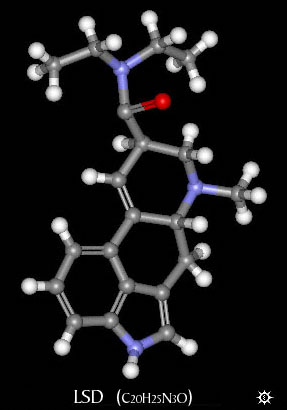
A suspension of 3.15 g d-lysergic acid hydrate and 7.1 g of diethylamine in 150 mL CHCl3 was brought to reflux with stirring. With the external heating removed, there was added 3.4 g POCl3 over the course of 2 min, at a rate sufficient to maintain refluxing conditions. The mixture was held at reflux for an additional 5 min, at which point everything had gone into solution. After returning to room temperature, the solution was added to 200 mL of 1 N NH4OH. The phases were separated, the organic phase dried over anhydrous MgSO4, filtered, and the solvent removed under vacuum. The residue was chromatographed over alumina with elution employing a 3:1 C6H6/CHCl3 mixture, and the collected fraction stripped of solvent under hard vacuum to a constant weight. This free-base solid can be recrystallized from benzene to give white crystals with a melting point of 87-92 °C. IR (in cm-1): 750, 776, 850, 937 and 996, with the carbonyl at 1631. The mass spectrum of the free base has a strong parent peak at mass 323, with sizable fragments at masses of 181, 196, 207 and 221.
This base was dissolved in warm, dry MeOH, using 4 mL per g of product. There was then added dry d-tartaric acid (0.232 g per g of LSD base), and the clear warm solution treated with Et2O dropwise until the cloudiness did not dispel on continued stirring. This opaqueness set to a fine crystalline suspension (this is achieved more quickly with seeding) and the solution allowed to crystallize overnight in the refrigerator. Ambient light should be severely restricted during these procedures. The product was removed by filtration, washed sparingly with cold methanol, with a cold 1:1 MeOH/Et2O mixture, and then dried to constant weight. The white crystalline product was lysergic acid diethylamide tartrate with two molecules of methanol of crystallization, with a mp of about 200 °C with decomposition, and weighed 3.11 g (66%). Repeated recrystallizations from methanol produced a product that became progressively less soluble, and eventually virtually insoluble, as the purity increased. A totally pure salt, when dry and when shaken in the dark, will emit small flashes of white light.
DOSAGE : 60 to 200 micrograms, orally
DURATION : 8 - 12 hrs
QUALITATIVE COMMENTS : In the case of LSD, it seems presumptuous to attempt to select typical comments for quotation. Literally thousands of reports are in the literature, from early exploratory research, to clinical applications for treatment of autism, of alcoholism, or mental illness, to assisting in psychotherapy and in the dying process, to the adventures of the military in both intelligence and chemical warfare, to innumerable anecdotal tales of pleasure and pain. Dozens of books have been devoted to these topics.
EXTENSIONS AND COMMENTARY : LSD is an unusually fragile molecule and some comments are in order as to its stability and storage. As a salt, in water, cold, and free from air and light exposure, it is stable indefinitely. There are two sensitive aspects of its structure. The position of the carboxamide attachment, the 8-position, is affected by basic, or high pH, conditions. Through a process called epimerization, this position can scramble, producing isolysergic acid diethylamide, or iso-LSD. This product is biologically inactive, and represents a loss of a proportionate amount of active product. A second and separate point of instability is the double bond that lies between this 8-position and the aromatic ring. Water or alcohol can add to this site, especially in the presence of light (sunlight with its ultraviolet energy is notoriously bad) to form a product that has been called lumi-LSD, which is totally inactive in man. Oh yes, and often overlooked, there may be only an infinitesimal amount of chlorine in treated tap water, but then there is only an infinitesimal amount of LSD in a typical LSD solution. And since chlorine will destroy LSD on contact, the dissolving of LSD in tap water is not appropriate.
There are many synthetic methods developed and reported for the preparation of LSD. All of them start with lysergic acid, and for that reason it has been listed as a Schedule III controlled drug, as a depressant, under Federal law. The amide lysergamide, a component of several varieties of morning glory seed, is also a controlled drug and, by law, a depressant. The earliest syntheses of LSD involved the used of an azide intermediate (the original Hofmann process, 1955), mixed anhydrides with trifluoroacetic anhydride (1956) or sulfuric anhydride (SO3-DMF on the lithium salt, 1959), with the peptide condensation agent N,N'-carbonyldiimidazole (1960), or with the acid chloride as the active intermediate with POCl3, PCl5 or thionyl chloride (1963) or just phosphorus oxychloride (1973). Most methods are faulted due to excessive moisture sensitivity, generation of side-products, or epimerization or inversion at the 8-position carbon to form d-iso-LSD. The POCl3 procedure is clean and fast, and is the preferred process today for the synthesis of a wide variety of substituted lysergamides.
The term LSD comes from the initials of the German for lysergic acid diethylamide, or Lysers�ure Diethylamid. The number "25" following it has many myths attached to it, such as it was the 25th form of LSD that Hofmann tried, or it was his 25th attempt to make LSD. From my own experience with chemical companies that are allied with pharmaceutical houses, I had assumed that the chemical name (which might be a mouthful for the pharmacologist) was simply replaced with a pronounceable code number equivalent. But the answer here is yet simpler. Hofmann, in his LSD, My Problem Child wrote: "In 1938, I produced the twenty fifth substance in a series of lysergic acid derivatives: lysergic acid diethylamide, abbreviated LSD-25 ... for laboratory usage."
Within a few years of the discovery of the extraordinary potency of LSD, a large number of close analogues were synthesized by Hofmann and his allies at Sandoz. Over the following decade many were tested in humans, both in patients and healthy subjects, with the qualitative descriptions and dosages published in the medical literature.
A number of analogues of LSD have maintained the diethylamide group unchanged, but additions or changes have been made in the pyrrole ring.
ALD-52. 1-Acetyl-N,N-diethyllysergamide. This material has been explored in the 50-175 microgram range and there are a number of human trials reported, with varying conclusions. One found that there was less visual distortion than with LSD and it seems to produce less anxiety and was somewhat less potent than LSD. Another report claimed it was more effective in increasing blood pressure. Yet another could not tell them apart. ALD-52 just may have been the drug that was sold as "Orange Sunshine" during the "Summer of Love" in the late '60's. Or "Orange Sunshine" may have been, really, LSD. This was the focus of a fascinating trial where two defendants were accused of distributing LSD, whereas they claimed that it was ALD-52 which was not an illegal drug. The prosecution claimed that as it hydrolyses readily to LSD, for all intents and purposes it was LSD, and anyway, you had to go through the illegal LSD to get to ALD-52 by any of the known chemical syntheses. The defendants were found guilty. And yet, I do not know who has actually measured the speed or ease of that reaction. If ALD-52 hydrolyses so easily to LSD, and the body is indeed a hydrolytic instrument, then these two drugs should be absolutely equivalent in every particular, This is the ergot equivalent of the psilocybin to psilocin argument, except this is an acetamide rather than a phosphate ester.
--indole-ring substituent-- at N-1 at C-2 code -H
-COCH3
-CH3
-CH2OH
-CH2N(CH3)2
-H
-H
-CH3
-CH3-H
-H
-H
-H
-H
-Br
-I
-Br
-ILSD-25
ALD-52
MLD-41
BOL-148
MBL-61
MIL
MLD-41. 1-Methyl-N,N-diethyllysergamide. The 1-methyl homologue of LSD is has more of somatic than sensory effect, has fewer visuals and is less well accepted than LSD, with the range of dosages being from 100 to 300 micrograms. This indicates that it is perhaps a third the potency of LSD which is in accord with both pupilary dilation and reflex action. However, the cardiovascular responses are actually increased. Besides being less potent than LSD, it appears to have a slower onset but it is equally long lived. There is cross-tolerance between MLD-41 and LSD.
BOL-148. 2-Bromo-N,N-diethyllysergamide. This synthetic ergot derivative, along with its 1-methyl homologue MBL-61 (mentioned below) should be used as powerful tools for studying the mechanism of action of LSD in the human animal. It does not have LSD-like effects in man. At 6 to 10 milligrams orally, there are some mental changes noted. But in another study, 20 milligrams was administered a day to a subject for 7 days, and there were no reported effects. And yet it is as potent a serotonin agonist as is LSD. How can serotonin be argued as a neurotransmitter that is a major player in explaining the action of psychedelic drugs, when this compound is nearly without activity.
There are some suggestions that an intravenous route may be more effective. I have heard of effects being noted at maybe a milligram and a short (2-3 hour) intoxication following 20 milligrams administered over a 20 minute period. I was involved many years ago in a study of radio-labelled BOL-148 which was made by the bromination of LSD. I was quite sure that the only radioactive material present was BOL-148, but there could well have been some unreacted LSD still present which would, of course, still be psychoactive. The synthesis is not clean -- I was tempted to make an entry for this compound if only to reproduce Albert Hofmann's original published experimental procedure. He reacted 13.2 grams of N-bromosuccinimide (in 400 mL dioxane, with 1.2 liters of dioxane containing 25 grams of LSD. This gave 11 grams of crude product which had to be recrystallized. The radioactive syntheses uses effectively elemental bromine, and gave yields of from 5 to 15%. Visualize that reaction! A warm flask containing over a quart of warm solvent in which there was maybe half a million doses of LSD.
1-Hydroxymethyl-LSD, 1-dimethylaminomethyl-LSD and 2-iodo-LSD. These three additional compounds are shown here because they were described in a synthetic flurry that followed the discovery the activity of LSD. But at the moment I know neither their internal Sandoz codes nor if they had ever been explored in man. This is a kind of frustrating catch-all entry, in that the long index will send you here, and once here you realize that nothing is known. Well, at least the compounds are known, and perhaps there is something in the Sandoz vaults that might be interesting. I do not have access to them.
MBL-61. 2-Bromo-N,N-diethyl-1-methyllysergamide. This is the compound BOL-148 (mentioned above) with a methyl group attached to the 1-position of the indole ring (LSD has a hydrogen there). This would be an even more tantalizing challenge to the serotonin theory for central activity of the psychedelics, in that it is without any activity in man at an oral dose of 14 milligrams (similar to the inactivity of the BOL-61 compound, but it is some five times more potent as a serotonin agonist. With it, as with the iodinated analogue MIL, there are many examples of the compromising of scientific integrity in the quest for funds and recognition. Both compounds are as effective as LSD itself in displacing labelled LSD that is bound to the post-synaptic serotonin receptor sites in animal brains. But neither of them show any LSD-like activity. But both have been labelled with 11C or 122I to give positron emitting forms that can be administered to man and localized in a positron emission tomography instrument (a PET scanner).
I was at a meeting of a NIDA study section a few years ago, where some one presented some findings with a group of subjects who were complaining of continuing mental problems allegedly due to LSD exposure. A chart was put up showing the outline of the brain showing the locations of the EEG foci that were observed in one of these subjects. Along side it was a PET scan showing the distribution of radioactive LSD in a subject. The purpose was to discuss the similarities and differences of the coordinates of electrical activity and radio-isotope concentration. I innocently asked what positron isotope had been used, as I did not know of any successful positron labelling of LSD. Carbon 11, I was told. Where in the molecule was the label incorporated, I asked. In the 1-position methyl group. It was finally acknowledged that the compound that had actually been used was 2-iodo-1-methyl-LSD, our MIL compound, which is quite a different world. A pharmacologist might say that they are similar in action (looking at serotonin, not psychedelic action), and a chemist might say they are of similar structure (looking at the upper 80% of the molecule. But they are different compounds. This is a most subtle form of deceit. It is, in fact, out and out dishonest, but it looks good up there on the screen at a lecture.
Let me mention in passing, that there are three stereoisomers possible for d-LSD. There are d-iso-LSD, l-LSD, and l-iso-LSD. The inversion of the stereochemistry of the attached diethylcarboxyamido group of d-LSD gives the diastereoisomer (d-iso-LSD) which is a frequent synthetic impurity of d-LSD itself. The corresponding optical antipodes l-LSD and l-iso-LSD are also known and have been tasted. All three are completely inactive: d-iso-LSD shows no psychological changes at an oral dose of 4 milligrams; l-LSD none at up to 10 milligrams orally; and l-iso-LSD none at 500 micrograms orally. These dramatic decreases in potency show both the stereoselectivity of the native LSD molecule in producing its central effects, and the LSD-free purity of these isomers.
The second major location of variations in the structure of LSD has been in the nature of the alkyl groups on the amide nitrogen atom. Some of these are Sandoz syntheses, some are from other research groups, and a few of them are found in nature. Some of these have been studied in man, and some have not. A few of the original clutch of Sandoz compounds have both 1-substituents and amide alkyl (R) group variations:
| indole | --- amide nitrogen substituents --- | ||
| R= | R= | R= | code name |
| -H -H -H -H -H -H -H -H -H -H -H -H -H -H -H -H -H -H -H -H -H -H -H -H -H -H -H -H -H -H -CH3 -CH3 -COCH3 -CH3 |
-H -CH3 -CH2CH3 -(CH2)2CH3 -CH(CH3)CH2OH -CH(CH3)CH2OH -(CH2)CH3 -CH(CH3)CH2CH2OH -(CH2)4CH3 -CH(CH3)CH2CH2CH3 -CH(CH2CH3)2 -(CH2)5CH3 -CH(CH3)CH2CH2CH2CH3 -(CH2)6CH3 -CH(CH3)CH2CH2CH2CH2CH3 -CH3 -CH2CH3 -(CH2)2CH3 -CH(CH3)2 -CH(CH3)CH2C6H5 -CH2CH3 -(CH2)2CH3 -(CH2)2CH3 -CH(CH3)2 -CH2CH=CH2 -(CH2)2CH3 -CH2CH=CHCH2- -CH2CH2CH2CH2CH2- -CH2CH2OCH2CH2- -CH(CH2CH3)CH2OH -COCH3 |
-H -H -H -H -H* -H -H* -H* -H -H* -H -H -H* -H -H* -CH3 -CH3 -CH3 -CH3 -CH3* -CH2CH3 -CH2CH3 -(CH2)2CH3 -CH(CH3)2 -CH2CH=CH2 -(CH2)3CH3 -H -H* -CH2CH3 |
LA-111 LAE-32 Ergonovine Methergine DAM-57 LAMP LSD-25 DAL LPD-824 LSM-775 MLA-74 UML-491 ALA-10 MPD-75 |
In the amides marked with "*" there has been the introduction of a new asymmetric center, which of course doubles the number of isomers that is possible. In each case the resulting two optical forms were prepared separately, and evaluated separately as to their pharmacology.
This listing is not intended to be thorough, but it is shown to suggest the amount of synthetic effort that has been made towards the exploring and understanding the high potency associated with those two remarkably important ethyl groups on the amide nitrogen of LSD. I have given the Sandoz code names, again, as far as I know them. Although none of these really warrant a dedicated recipe, there is sufficient animal and human pharmacology reported to justify listing them below as separate items. Most of these reports appeared in the mid-1950's but some studies are still being done and papers are published even today with new ideas but, sadly, only with animal pharmacology. I have been as guilty as the next person who has tried to mount all these compounds into a table with a "human potency" factor that compares them directly to LSD. This is an uncomfortable simplification. Here are the actual reported observations, and I'll let the reader provide his own potency index.
LA-111, ergine, d-lysergamide. This is an active compound and has been established as a major component in morning glory seeds. It was assayed for human activity, by Albert Hofmann in self-trials back in 1947, well before this was known to be a natural compound. An i.m. administration of a 500 microgram dose led to a tired, dreamy state with an inability to maintain clear thoughts. After a short period of sleep, the effects were gone and normal baseline was recovered within five hours. Other observers have confirmed this clouding of consciousness leading to sleep. The epimer, inverted at C-8, is isoergine or d-isolysergamide, and is also a component of morning glory seeds. Hofmann tried a 2 milligram dose of this amide, and as with ergine, he experienced nothing but tiredness, apathy, and a feeling of emptiness. Both compounds are probably correctly dismissed as not being a contributor to the action of these seeds. It is important to note that ergine, as well as lysergic acid itself, is listed as a Schedule III drug in the Controlled Substances Act, as a depressant. This is, in all probability, a stratagem to control them as logical precursors to LSD.
LAE-32, N-ethyllysergamide. Different people have observed and reported different effects, with different routes of administration. Subcutaneous administrations of from 500 to 750 micrograms have been said to produce a state of apathy and sedation. Clinical studies with dosages of 500 micrograms i.m. were felt to be less effective than the control use of 100 micrograms of LSD. And yet, oral doses of twice this amount, 1.6 milligrams, have been said to produce a short-lived LSD-like effect with none of these negatives.
LPD-824, N-Pyrrolidyllysergamide. Five trials at a dosage of 800 micrograms orally led to the reporting of a fleeting effect that was similar to one tenth this amount of LSD.
LSM-775, N-Morpholinyllysergamide. There are conflicting reports; one states that 75 micrograms is an effective dose, comparable to a similar dose of LSD, and the other stated that between 350 and 700 micrograms was needed to elicit this response, and that there were fewer signs of cardiovascular stimulation and peripheral toxicity.
DAM-57, N,N-Dimethyllysergamide. This compound did induce autonomic disturbances at oral levels of some ten times the dosage required for LSD, presumably in the high hundreds of micrograms. There is some disagreement as to whether there were psychic changes observed.
DAL, N,N-Diallyllysergamide. As the tartrate salt, there is at best a touch of sparkle seen at 600 micrograms orally, but there is a sedation also reported. It is certainly an order of magnitude less potent than LSD itself.
UML-491, Methysergide, Sansert. This is the synthetic homologue of methergine (1-methyl) and is employed clinically as a treatment for migraine headaches. When the usual therapeutic dosage of two milligrams is scaled up by a factor of ten, there is a profound LSD-like response described by most subjects. A number of these ergot analogues from nature can be considered as potential precursors for the preparation of LSD. But here, there is a 1-methyl group that is effectively permanently attached, so it cannot play this role.
The third location of structural modification of the LSD molecule has been at the 6-position in ring D. This is the LAD series with any of several alkyl groups attached to the nitrogen atom. The methyl group is found with LSD itself, and is reason for using METH-LAD in the title as a synonym. The ethyl, allyl and propyl substitutions provide ETH-LAD, AL-LAD, and PRO-LAD, and each of these commands a separate entry.
The most frequently encountered precursor for the manufacture of LSD is ergotamine, a major alkaloid of the ergot world. It is totally unknown in the morning glories. The usual commercial form is the tartrate salt, and is often referred to under the code abbreviation of ET, for ergotamine tartrate. It has found medical use in the treatment of migraine headaches, and as an oxytocic (an agent that is used in childbirth to stimulate uterine contractions. Care with the ET terminology must be taken, in that in the drug world it has two additional associations; a-ET for alpha-ethyltryptamine and NET for N-monoethyltryptamine.
Ergonovine is a naturally occurring, water-soluble ergot alkaloid, found in both ergot preparations and in many species of morning glory seeds, and there are several reports of LSD-like action at oral levels of between two and ten milligrams. It has an important use in obstetrics, again as an oxytocic, at about a tenth of this dose. This pharmacological potential must be respected in psychopharmacological trials. The one-carbon homologue (the butanolamide rather than the propanolamide) is called methergine or methylergonovine. It is a synthetic ally and is orally effective as an oxytocic at a dosage of 200 micrograms. It also has an LSD-like action at ten times this level.
Although there are many other chemical treasures in the ergot fungal world, I would like to wrap this commentary up with a return to the topic of morning glory seeds. Four additional alkaloids of the ergot world must be acknowledged as being potentially participating factors in the MGS story. With each of these, the primary ergoline ring system is largely intact but the amide function is completely gone. The carboxyl group has been reduced to the alcohol to give elymoclavine. There is the related molecule present which is the isomer with the double bond moved to be conjugated with the aromatic ring; it is called lysergol. There is the same molecule but with a hydroxy group attached to the 8-position carbon atom (an ethyleneglycol!) ; it is called penniclavine. And lastly, that D-ring can actually be opened between the 5 and 6 positions, to give us a secondary amine tryptamine derivative, chanoclavine. To be completely anally retentive in this Ipomoea inventory, mention must be made of five alkaloids that are present in truly trace amounts, all of which have no oxygen atoms present whatsoever on that substitution on the ergoline 8-position. These are the 8-methyl isomers agroclavine, setoclavine, festuclavine and cycloclavine, and the methylene analogue lysergene. These structures in effect define absolute obscurity, and most probably do not contribute to the morning glory intoxication state. But the others, some present is sizable amounts, may someday help explain why the pharmacology of these seeds is so different than that of the major isolates, the ergines.
Fuente: http://www.erowid.org
[MDMA] PIHKAL #109 mdma
#109 MDMA
MDM; ADAM; ECSTASY; 3,4-METHYLENEDIOXY-N-METHYLAMPHETAMINE
|
|
[3D .jpg image] [3D .mol structure] |

A solution of 7.7 g N-formyl-3,4-methylenedioxyamphetamine in 25 mL anhydrous THF was added dropwise to a well stirred and refluxing solution of 7.4 g LAH in 600 mL anhydrous THF under an inert atmosphere. The reaction mixture was held at reflux for 4 days. After being brought to room temperature, the excess hydride was destroyed with 7.4 mL H2O in an equal volume of THF, followed by 7.4 mL of 15% NaOH and then another 22 mL H2O. The solids were removed by filtration, and the filter cake washed with additional THF. The combined filtrate and washes were stripped of solvent under vacuum, and the residue dissolved in 200 mL CH2Cl2. This solution was extracted with 3x100 mL dilute HCl, and these extracts pooled and made basic with 25% NaOH. Extraction with 3x75 mL CH2Cl2 removed the product, and the pooled extracts were stripped of solvent under vacuum. There was obtained 6.5 g of a nearly white residue which was distilled at 100-110 ° C at 0.4 mm/Hg to give 5.0 g of a colorless oil. This was dissolved in 25 mL IPA, neutralized with concentrated HCl, followed by the addition of sufficient anhydrous Et2O to produce a lasting turbidity. On continued stirring, there was the deposition of fine white crystals of 3,4-methylenedioxy-N-methylamphetamine hydrochloride (MDMA) which were removed by filtration, washed with Et2O, and air dried, giving a final weight of 4.8 g.
(from 3,4-methylenedioxyphenylacetone) This key intermediate to all of the MD-series can be made from either isosafrole, or from piperonal via 1-(3,4-methylenedioxyphenyl)-2-nitropropene. To a well stirred solution of 34 g of 30% hydrogen peroxide in 150 g 80% formic acid there was added, dropwise, a solution of 32.4 g isosafrole in 120 mL acetone at a rate that kept the reaction mixture from exceeding 40 ° C. This required a bit over 1 h, and external cooling was used as necessary. Stirring was continued for 16 h, and care was taken that the slow exothermic reaction did not cause excess heating. An external bath with running water worked well. During this time the solution progressed from an orange color to a deep red. All volatile components were removed under vacuum which yielded some 60 g of a very deep red residue. This was dissolved in 60 mL of MeOH, treated with 360 mL of 15% H2SO4, and heated for 3 h on the steam bath. After cooling, the reaction mixture was extracted with 3x75 mL Et2O, the pooled extracts washed first with H2O and then with dilute NaOH, and the solvent removed under vacuum The residue was distilled (at 2.0 mm/108-112 ° C, or at about 160 ° C at the water pump) to provide 20.6 g of 3,4-methylenedioxyphenylacetone as a pale yellow oil. The oxime (from hydroxylamine) had a mp of 85-88 ° C. The semicarbazone had a mp of 162-163 ° C.
An alternate synthesis of 3,4-methylenedioxyphenylacetone starts originally from piperonal. A suspension of 32 g electrolytic iron in 140 mL glacial acetic acid was gradually warmed on the steam bath. When quite hot but not yet with any white salts apparent, there was added, a bit at a time, a solution of 10.0 g of 1-(3,4-methylenedioxyphenyl)-2-nitropropene in 75 mL acetic acid (see the synthesis of MDA for the preparation of this nitrostyrene intermediate from piperonal and nitroethane). This addition was conducted at a rate that permitted a vigorous reaction free from excessive frothing. The orange color of the reaction mixture became very reddish with the formation of white salts and a dark crust. After the addition was complete, the heating was continued for an additional 1.5 h during which time the body of the reaction mixture became quite white with the product appeared as a black oil climbing the sides of the beaker. This mixture was added to 2 L H2O, extracted with 3x100 mL CH2Cl2, and the pooled extracts washed with several portions of dilute NaOH. After the removal of the solvent under vacuum, the residue was distilled at reduced pressure (see above) to provide 8.0 g of 3,4-methylenedioxyphenylacetone as a pale yellow oil.
To 40 g of thin aluminum foil cut in 1 inch squares (in a 2 L wide mouth Erlenmeyer flask) there was added 1400 mL H2O containing 1 g mercuric chloride. Amalgamation was allowed to proceed until there was the evolution of fine bubbles, the formation of a light grey precipitate, and the appearance of occasional silvery spots on the surface of the aluminum. This takes between 15 and 30 min depending on the freshness of the surfaces, the temperature of the H2O, and the thickness of the aluminum foil. (Aluminum foil thickness varies from country to country.) The H2O was removed by decantation, and the aluminum was washed with 2x1400 mL of fresh H2O. The residual H2O from the final washing was removed as thoroughly as possible by shaking, and there was added, in succession and with swirling, 60 g methylamine hydrochloride dissolved in 60 mL warm H2O, 180 mL IPA, 145 mL 25% NaOH, 53 g 3,4-methylenedioxyphenylacetone, and finally 350 mL IPA. If the available form of methylamine is the aqueous solution of the free base, the following sequence can be substituted: add, in succession, 76 mL 40% aqueous methylamine, 180 mL IPA, a suspension of 50 g NaCl in 140 mL H2O that contains 25 mL 25% NaOH, 53 g 3,4-methylenedioxyphenylacetone, and finally 350 mL IPA. The exothermic reaction was kept below 60 ° C with occasional immersion into cold water and, when it was thermally stable, it was allowed to stand until it had returned to room temperature with all the insolubles settled to the bottom as a grey sludge. The clear yellow overhead was decanted and the sludge removed by filtration and washed with MeOH. The combined decantation, mother liquors and washes, were stripped of solvent under vacuum, the residue suspended in 2400 ml of H2O, and sufficient HCl added to make the phase distinctly acidic. This was then washed with 3x75 mL CH2Cl2, made basic with 25% NaOH, and extracted with 3x100 mL of CH2Cl2. After removal of the solvent from the combined extracts, there remained 55 g of an amber oil which was distilled at 100-110 ° C at 0.4 mm/Hg producing 41 g of an off-white liquid. This was dissolved in 200 mL IPA, neutralized with about 17 mL of concentrated HCl, and then treated with 400 mL anhydrous Et2O. After filtering off the white crystals, washing with an IPA/Et2O mixture, (2:1), with Et2O, and final air drying, there was obtained 42.0 g of 3,4-methylenedioxy-N-methylamphetamine (MDMA) as a fine white crystal. The actual form that the final salt takes depends upon the temperature and concentration at the moment of the initial crystallization. It can be anhydrous, or it can be any of several hydrated forms. Only the anhydrous form has a sharp mp; the published reports describe all possible one degree melting point values over the range from 148-153 ° C. The variously hydrated polymorphs have distinct infrared spectra, but have broad mps that depend on the rate of heating.
DOSAGE: 80 - 150 mg.
DURATION: 4 - 6 h.
QUALITATIVE COMMENTS: (with 100 mg) MDMA intrigued me because everyone I asked, who had used it, answered the question, 'What's it like?' in the same way: 'I don't know.' 'What happened?' 'Nothing.' And now I understand those answers. I too think nothing happened. But something seemed changed. Before the 'window' opened completely, I had some somatic effects, a tingling sensation in the fingers and temples--a pleasant sensation, not distracting. However, just after that there was a slight nausea and dizziness similar to a little too much alcohol. All these details disappeared as I walked outside. My mood was light, happy, but with an underlying conviction that something significant was about to happen. There was a change in perspective both in the near visual field and in the distance. My usually poor vision was sharpened. I saw details in the distance that I could not normally see. After the peak experience had passed, my major state was one of deep relaxation. I felt that I could talk about deep or personal subjects with special clarity, and I experienced some of the feeling one has after the second martini, that one is discoursing brilliantly and with particularly acute analytical powers.
(with 100 mg) Beforehand, I was aware of a dull, uncaring tiredness that might have reflected too little sleep, and I took a modest level of MDMA to see if it might serve me as a stimulant. I napped for a half hour or so, and woke up definitely not improved. The feeling of insufficient energy and lack of spark that I'd felt before had become something quite strong, and might be characterized as a firm feeling of negativity about everything that had to be done and everything I had been looking forward to. So I set about my several tasks with no pleasure or enjoyment and I hummed a little tune to myself during these activities which had words that went: 'I shouldn't have done that, oh yes, I shouldn't have done that, oh no, I shouldn't have done that; it was a mistake.' Then I would start over again from the beginning. I was stuck in a gray space for quite a while, and there was nothing to do but keep doing what I had to do. After about 6 hours, I could see the whole mental state disintegrating and my pleasant feelings were coming back. But so was my plain, ornery tiredness. MDMA does not work like Dexedrine.
(with 120 mg) I feel absolutely clean inside, and there is nothing but pure euphoria. I have never felt so great, or believed this to be possible. The cleanliness, clarity, and marvelous feeling of solid inner strength continued throughout the rest of the day, and evening, and through the next day. I am overcome by the profundity of the experience, and how much more powerful it was than previous experiences, for no apparent reason, other than a continually improving state of being. All the next day I felt like 'a citizen of the universe' rather than a citizen of the planet, completely disconnecting time and flowing easily from one activity to the next.
(with 120 mg) As the material came on I felt that I was being enveloped, and my attention had to be directed to it. I became quite fearful, and my face felt cold and ashen. I felt that I wanted to go back, but I knew there was no turning back. Then the fear started to leave me, and I could try taking little baby steps, like taking first steps after being reborn. The woodpile is so beautiful, about all the joy and beauty that I can stand. I am afraid to turn around and face the mountains, for fear they will overpower me. But I did look, and I am astounded. Everyone must get to experience a profound state like this. I feel totally peaceful. I have lived all my life to get here, and I feel I have come home. I am complete.
(with 100 mg of the "R" isomer) There were the slightest of effects noted at about an hour (a couple of paresthetic twinges) and then nothing at all.
(with 160 mg of the "R" isomer) A disturbance of baseline at about forty minutes and this lasts for about another hour. Everything is clear by the third hour.
(with 200 mg of the "R" isomer) A progression from an alert at thirty minutes to a soft and light intoxication that did not persist. This was a modest +, and I was at baseline in another hour.
(with 60 mg of the "S" isomer) The effects began developing in a smooth, friendly way at about a half-hour. My handwriting is OK but I am writing faster than usual. At the one hour point, I am quite certain that I could not drive, time is slowing down a bit, but I am mentally very active. My pupils are considerably dilated. The dropping is evident at two hours, and complete by the third hour. All afternoon I am peaceful and relaxed, but clear and alert, with no trace of physical residue at all. A very successful ++.
(with 100 mg of the "S" isomer) I feel the onset is slower than with the racemate. Physically, I am excited, and my pulse and blood pressure are quite elevated. This does not have the 'fire' of the racemate, nor the rush of the development in getting to the plateau.
(with 120 mg of the "S" isomer) A rapid development, and both writing and typing are impossible before the end of the first hour. Lying down with eyes closed eliminates all effects; the visual process is needed for any awareness of the drug's effects. Some teeth clenching, but no nystagmus. Excellent sleep in the evening.
EXTENSIONS AND COMMENTARY: In clinical use, largely in psychotherapeutic sessions of which there were many in the early years of MDMA study, it became a common procedure to provide a supplemental dosage of the drug at about the one and a half hour point of the session. This supplement, characteristically 40 milligrams following an initial 120 milligrams, would extend the expected effects for about an additional hour, with only a modest exacerbation of the usual physical side-effects, namely, teeth clenching and eye twitching. A second supplement (as, for instance, a second 40 milligrams at the two and a half hour point) was rarely felt to be warranted. There are, more often than not, reports of tiredness and lethargy on the day following the use of MDMA, and this factor should be considered in the planning of clinical sessions.
With MDMA, the usual assignments of activity to optical isomers is reversed from all of the known psychedelic drugs. The more potent isomer is the "S" isomer, which is the more potent form of amphetamine and methamphetamine. This was one of the first clear distinctions that was apparent between MDMA and the structurally related psychedelics (where the "R" isomers are the more active). Tolerance studies also support differences in mechanisms of action. In one study, MDMA was consumed at 9:00 AM each day for almost a week (120 milligrams the first day and 160 milligrams each subsequent day) and by the fifth day there were no effects from the drug except for some mydriasis. And even this appeared to be lost on the sixth day. At this point of total tolerance, there was consumed (on day #7, at 9:00 AM) 120 milligrams of MDA and the response to it was substantially normal with proper chronology, teeth clench, and at most only a slight decrease in mental change. A complete holiday from any drug for another 6 days led to the reversal of this tolerance, in that 120 milligrams of MDMA had substantially the full expected effects. The fact that MDMA and MDA are not cross-tolerant strengthens the argument that they act in different ways, and at different sites in the brain.
A wide popularization of the social use of MDMA occurred in 1984-1985 and, with the reported observation of serotonin nerve changes in animal models resulting from the administration of the structurally similar drug MDA, an administrative move was launched to place it under legal control. The placement of MDMA into the most restrictive category of the Federal Controlled Substances Act has effectively removed it from the area of clinical experimentation and human research. The medical potential of this material will probably have to be developed through studies overseas.
A word of caution is in order concerning the intermediate 3,4-methylene-dioxyphenylacetone, which has also been called piperonylacetone. A devilish ambiguity appeared in the commercial market for this compound, centered about its name. The controversy focused on the meaning of the prefix, piperonyl, which has two separate chemical definitions. Let me try to explain this fascinating chaos in non-chemical terms. Piperonyl is a term that has been used for a two-ring system (the methylenedioxyphenyl group) either without, or with, an extra carbon atom sticking off of the side of it. Thus, piperonylacetone can be piperonyl (the two-ring thing without the extra carbon atom attached) plus acetone (a three carbon chain thing); the total number of carbons sticking out, three. Or, piperonylacetone can be piperonyl (the two-ring thing but with the extra carbon atom attached) plus acetone (a three carbon chain thing); the total number of carbons sticking out, four.
Does this make sense?
The three carbon sticking out job gives rise to MDA and to MDMA and to many homologues that are interesting materials discussed at length in these Book II comments. This is the usual item of commerce, available from both domestic and foreign suppliers. But the four-carbon sticking out job will produce totally weird stuff without any apparent relationship to psychedelics, psychoactives or psychotropics whatsoever. I know of one chemical supply house which supplied the weird compound, and they never did acknowledge their unusual use of the term piperonyl. There is a simple difference of properties which might be of value. The three carbon (correct) ketone is an oil with a sassafras smell that is always yellow colored. The four carbon (incorrect) ketone has a weak terpene smell and is white and crystalline. There should be no difficulties in distinguishing these two compounds. But unprincipled charlatans can always add mineral oil and butter yellow to otherwise white solids to make them into yellow oils. Caveat emptor.
Fuente: http://www.erowid.org
martes, 3 de julio de 2012
Indice
Renuncia de responsabilidad
Este blog es un rejunte de datos y experiencias sobre drogas psicodelicas para uso educativo con el fin de reducir potenciales daños. Si no se siente comodo con la idea de consumir y/o escribir sobre drogas abrace su hipocresia y cierre su explorador.-
atte. El Autor
Indice
- LSD - Marihuana - MDMA - Hongos - Guias - Artilugios - Filosofia - Documentales - Peliculas - Libros -
Este blog es un rejunte de datos y experiencias sobre drogas psicodelicas para uso educativo con el fin de reducir potenciales daños. Si no se siente comodo con la idea de consumir y/o escribir sobre drogas abrace su hipocresia y cierre su explorador.-
atte. El Autor
ATENCION: BLOG EN CONSTRUCCION
EN BREVE IRAN APARECIENDO LOS LINKS A LOS ARTICULOS
Indice
- LSD - Marihuana - MDMA - Hongos - Guias - Artilugios - Filosofia - Documentales - Peliculas - Libros -
Suscribirse a:
Entradas (Atom)